The Building That Breathed Art
You probably drove past Mercury Studios a thousand times without noticing it. The squat brick building on 14th Street looked like every other converted warehouse in the district. But walk through those heavy metal doors on a Thursday evening and you’d find Elena Rodriguez bent over her jewelry bench, silver wire catching the overhead light. Down the hall, Marcus Chen would be pulling prints in the darkroom he built himself, chemistry smell mixing with the coffee someone always had brewing.
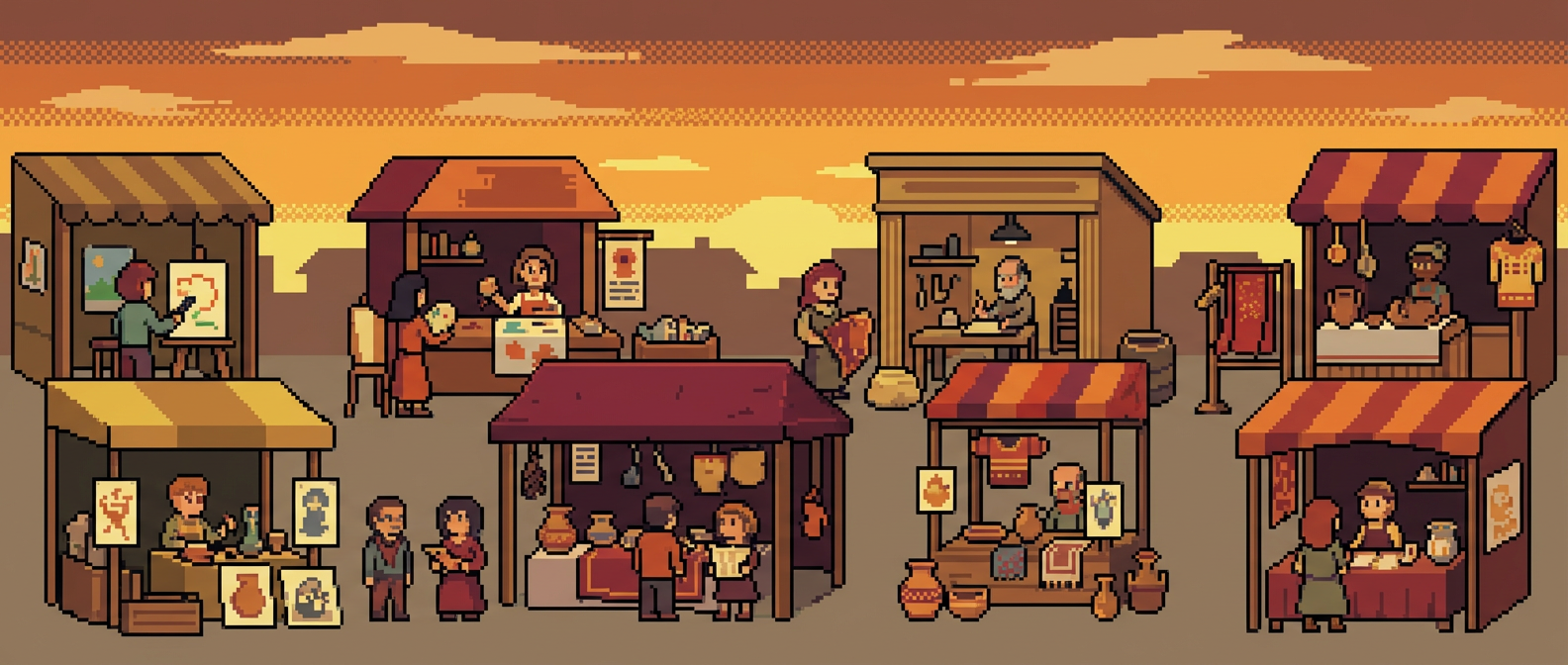
Twenty-seven artists called Mercury home for eight years. Not just studio space either. This was where Keiko Tanaka first showed her textile installations before galleries started calling. Where the Brass Monkey collective figured out how to make large-scale sculptures on a shoestring budget. Where Sarah Okafor taught neighborhood kids screen printing every Saturday morning, no questions asked about ability to pay.
The eviction notice went up last Tuesday. Thirty days to clear out.

What Gets Lost When the Lease Runs Out
People talk about losing affordable housing like it’s the only displacement that matters. But when maker spaces die, whole ecosystems disappear. Mercury wasn’t just twenty-seven individual studios. It was the metal shop where three different artists shared tools they couldn’t afford alone. The kiln that fired ceramics for half the pottery makers in the city. The loading dock where everyone helped everyone move large pieces.
Ask anyone who worked there and they’ll tell you the same thing. The magic wasn’t in the space itself. It was in the 2 AM conversations about technique and failure. The way seasoned artists would quietly leave materials outside newcomers’ doors. How problems got solved collectively, whether you needed someone to watch your booth at the market or figure out why your glazes kept cracking.
Rodriguez has been making jewelry for twelve years, but she says her real education happened in Mercury’s hallways. “You’d overhear someone talking through their process and suddenly understand something that had been bugging you for months,” she tells me while packing her bench tools. “That doesn’t happen when you’re isolated in your bedroom or kitchen table.”
Now everyone scatters. Some will find new spaces, probably smaller and more expensive. Others will scale back, work from home, lose the community that pushed them to take risks. A few might stop making art entirely. The city’s creative ecosystem doesn’t just shrink. It fractures.
The Math That Kills Community
Here’s what happened to Mercury in numbers that actually matter. Rent started at $8 per square foot in 2016. Reasonable for raw space with concrete floors and temperamental heating. But the neighborhood shifted. Coffee shops got sleeker. Condos went up. New businesses moved in with bigger budgets and longer leases.
The landlord’s math got simple. Mercury’s twenty-seven artists collectively paid $11,000 monthly. The yoga studio that’s moving in will pay $15,000 for half the space. Why negotiate with people who need loading docks and make noise when you can rent to someone who promises serenity and sells $30 leggings?
This isn’t about evil landlords or greedy developers. It’s about a system where cultural value and real estate value operate in different currencies. Mercury’s artists contributed immeasurably to what made this neighborhood interesting. Their work ended up in galleries, restaurants, and homes throughout the city. But none of that shows up in a lease application.
The tragedy isn’t just displacement. It’s how predictable this has become. Artists find marginal spaces, make them come alive, attract attention, and get priced out by their own success. The city gets cultural cache without protecting the conditions that create culture.
Where the Work Goes Next
Some Mercury artists are already regrouping. Chen found space in a warehouse twenty minutes further out, but the commute means less drop-in collaboration. The Brass Monkey collective is splitting up, members joining different spaces across town. Tanaka plans to apply for a residency in Portland, tired of the constant scramble for affordable space.
Rodriguez and five others are looking at a former auto repair shop in an industrial area where artists aren’t supposed to work after hours. They’ll probably sign the lease anyway. Risk the fines. Start over with building community from scratch.
The kids from Okafor’s Saturday workshops are the ones I worry about most. Where do they go to learn that making things with your hands isn’t just a hobby but a way of understanding the world? Mercury wasn’t just keeping artists working. It was growing them.
What Remains
Drive down 14th Street next month and you’ll see yoga mats through clean windows where welding sparks used to fly. The transformation will look like progress to some. Neighborhood improvement. Higher property values. Less noise and mess.
But something irreplaceable gets lost in translation. The informal networks. The shared knowledge. The willingness to fail publicly and try again. The understanding that art-making is both solitary practice and collective endeavor.
Mercury Studios joins a long list of spaces this city has lost to the math of real estate. But each closure doesn’t just subtract square footage from the arts community. It cuts connections that took years to build and can’t be easily rebuilt.
The artists will adapt. They always do. Find new spaces, create new communities, keep making work that matters. But we shouldn’t mistake resilience for sustainability. And we shouldn’t pretend that what we’re losing doesn’t leave holes.
If you know of spaces opening up, or want to help Mercury artists find their footing, reach out. This community scatters but doesn’t disappear. The work continues, just in smaller rooms and with longer commutes. The neighborhood gets its yoga studio. We get to figure out where art happens next.