The Setup Nobody Saw Coming
The Mitchell Street Warehouse looked like nothing special in 2019. Cracked concrete floors. Windows that had seen better decades. The kind of raw industrial space that real estate listings call “full of potential” because they can’t think of anything else to say. But Marcus Chen and the Collective Theater crew saw something different when they signed that lease.
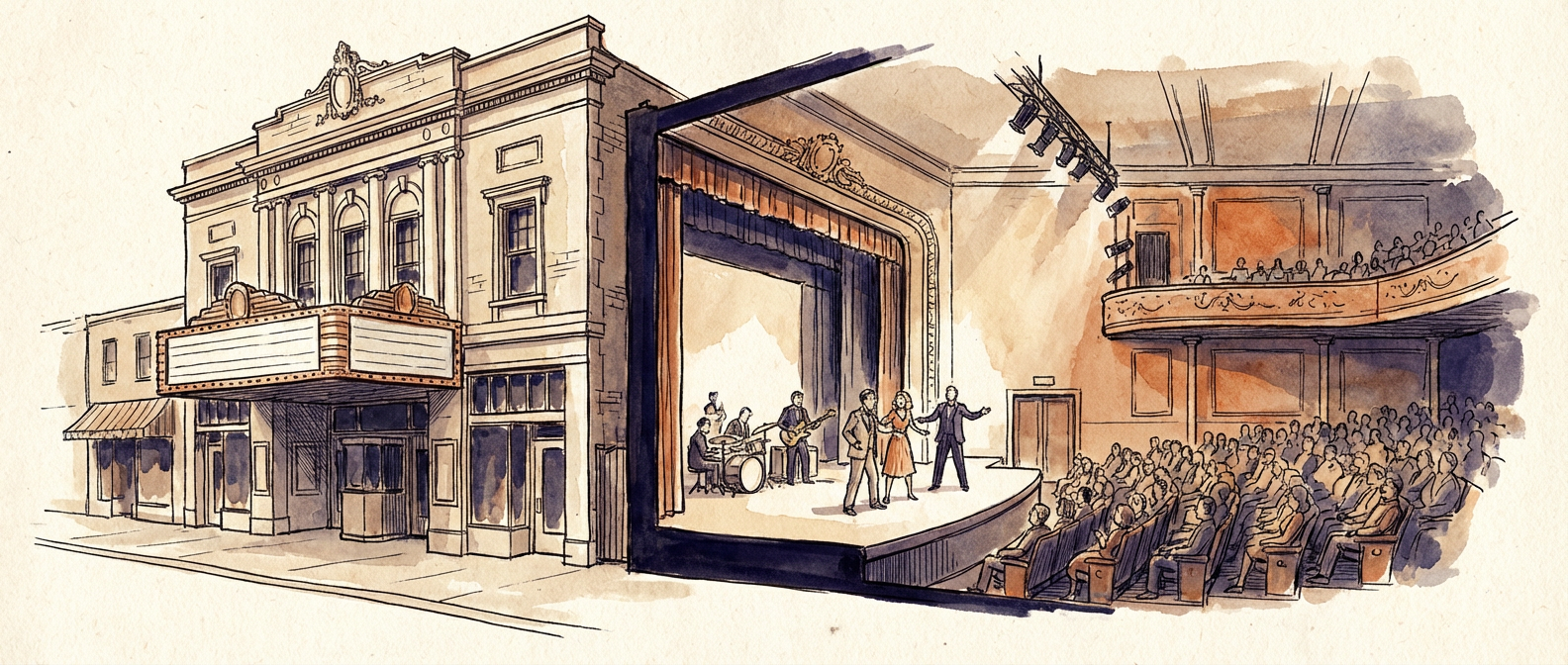
They weren’t trying to build the next regional powerhouse. They just needed 3,000 square feet where they could mount shows without someone telling them the material was too weird or the cast too diverse. Basic black box setup. Folding chairs from the church supply store. A lighting grid put together from three different companies going out of business.
The magic wasn’t in the infrastructure. It was in the deliberate choices Marcus made from day one. No assigned seating meant people mixed. No traditional lobby meant conversations spilled into the alley during intermission. Most importantly, he programmed like someone who actually lived in the neighborhood instead of someone trying to import culture from somewhere else.
The Three Shows That Changed Everything
“Neighbors” opened in February 2020. Right before everything shut down, but not soon enough to avoid the chaos entirely. Maya Rodriguez had been workshopping this piece about gentrification for two years, using actual interviews from people being priced out of the area around the theater. Not subtle. Not comfortable. The kind of material that makes subscribers cancel their donations at bigger venues.
The production design was brilliant in its simplicity. Set pieces made from actual debris found in the lot next door. Lighting that shifted based on which characters could afford to keep their electricity on. The audience sat close enough to see the actors sweat, which mattered because half the drama came from the silences between words.
Marcus programmed it back to back with “The Laundromat Chronicles,” Terrence Washington’s meditation on working third shift in the neighborhood laundromat. Different writer, completely different style, but something about experiencing both shows in the same space created this conversation between the productions. People started staying after shows just to keep talking.
Then came “Signal/Noise” in late 2021, when live theater was still finding its footing again. Jensen Kim took the entire concept of what theater could be and turned it sideways. Interactive sound design. The audience moved through the space instead of staying seated. Part performance, part installation, part experiment in collective storytelling. It sold out six weeks straight, mostly through word of mouth and Instagram stories shot in the alley.
Why It Worked Here and Not Somewhere Else
Timing was everything, but not in the way people usually mean. The Warehouse opened just as downtown was hitting that sweet spot where the artists could still afford to live there but the infrastructure existed to support their work. Three coffee shops within walking distance. The 14 bus line actually running on schedule. Parking that didn’t cost more than the ticket price.
Marcus also understood something that bigger venues often miss: the connection between the physical space and the artistic programming. The warehouse’s concrete floors and exposed beams weren’t flaws to hide with fancy renovation. They were features that certain kinds of stories needed. “Signal/Noise” wouldn’t have worked in a traditional theater with fixed seating and proper acoustics. It needed the raw edges.
The breakthrough moment was realizing they didn’t need to compete with the established venues downtown. Instead of trying to mount smaller versions of what the big theaters were doing, they programmed work that literally couldn’t happen anywhere else. Site-specific pieces. Collaborations with local musicians and visual artists. Shows that treated the neighborhood as part of the creative process instead of just a convenient location.
Most importantly, Marcus hired local. Not just actors, but designers, technicians, front of house staff. People who already understood the community and could recognize when something special was happening. The Warehouse developed its own aesthetic because the same core group of artists kept pushing each other toward more interesting questions.
What It Started
Other spaces started paying attention. The old church basement where poet Sarah Kim had been hosting monthly readings suddenly got serious about installing proper lighting. The community center added a small performance budget to their programming. Even the big regional theater downtown started booking more work from local writers, mostly because they were tired of reading reviews that compared their shows unfavorably to what was happening at the Warehouse.
The real measure of success wasn’t awards or press coverage. It was the way people started talking about theater differently. Instead of something you planned weeks in advance and dressed up for, going to shows became part of the regular social fabric. People brought visitors. Regulars started recognizing each other and forming those loose friendships that happen around shared enthusiasms.
Three seasons in, the Warehouse has spawned its own small ecosystem. Actors who met during auditions started a monthly improv night. The sound designer from “Signal/Noise” opened a recording studio two blocks away. Maya Rodriguez just got commissioned to adapt “Neighbors” for Chicago, but she’s keeping the local production rights because she wants the show to keep evolving in the space where it started.
The waiting list for season subscriptions hit 200 people last month. Marcus could probably move to a bigger space and double his revenue, but he won’t. The intimacy isn’t just about budget constraints anymore. It’s about maintaining the conditions that allowed the breakthrough to happen in the first place.
Next month they’re starting a resident artist program for local writers who want to develop work specifically for the space. Applications opened last week and they’re already oversubscribed. If you’re thinking about submitting something, the deadline is March 15th and Marcus actually reads every proposal himself.