The Moment When Film Became Expensive
There’s this specific moment in January 2025 when the analog photography world shifted. Kodak raised prices on Portra 400, one of the most beloved films for portrait work, by 22 percent. A single roll went from nine dollars to twenty-two dollars. That’s not a gradual creep. That’s a line in the sand. And if you’re someone who shoots three, four, five rolls on a Saturday trying to figure out what you’re doing with depth and light and composition, that’s suddenly a commitment that costs more than dinner.
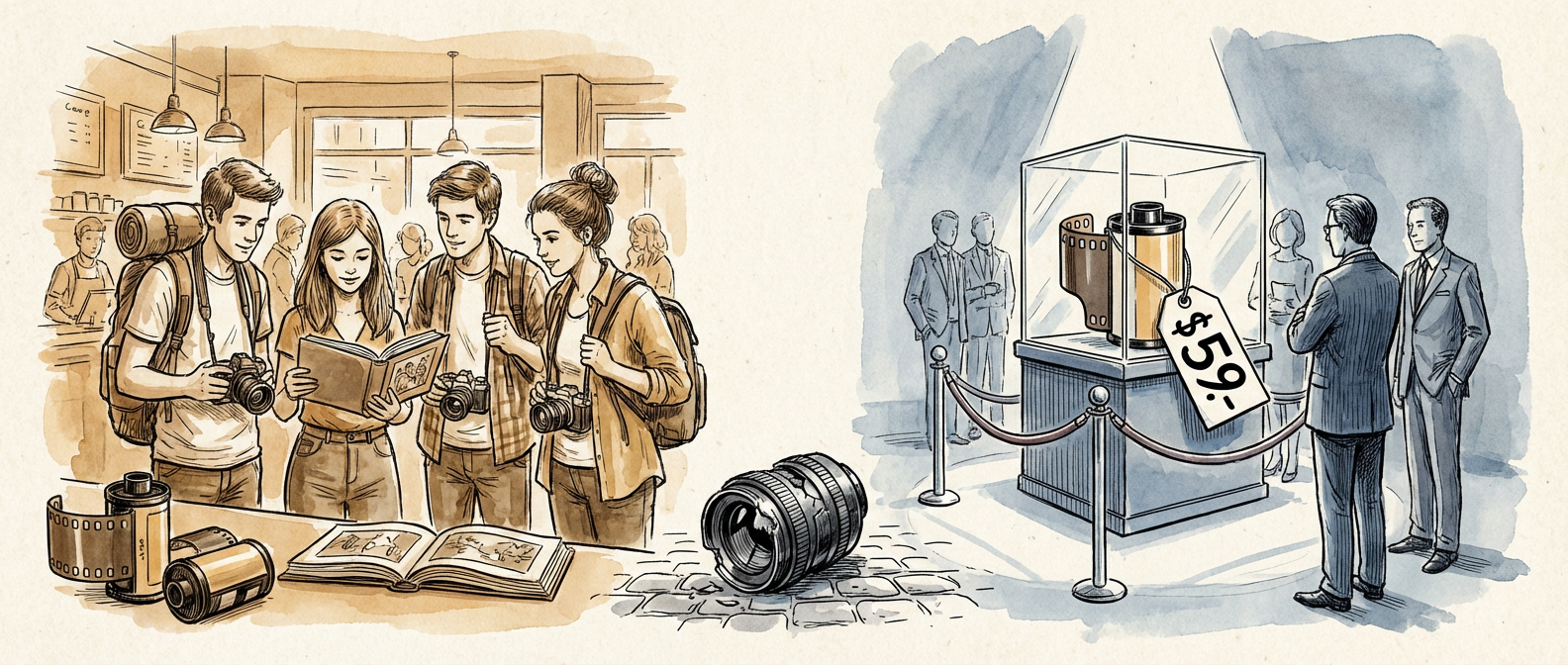
This didn’t happen in a vacuum, either. Fujifilm had already discontinued Fujicolor C200 in 2024, which was basically the gateway drug for beginners. It was affordable. It was forgiving. It was the film that let you fail cheaply and learn anyway. Now it’s gone. The entry point has disappeared, and what’s left is professional tier pricing.
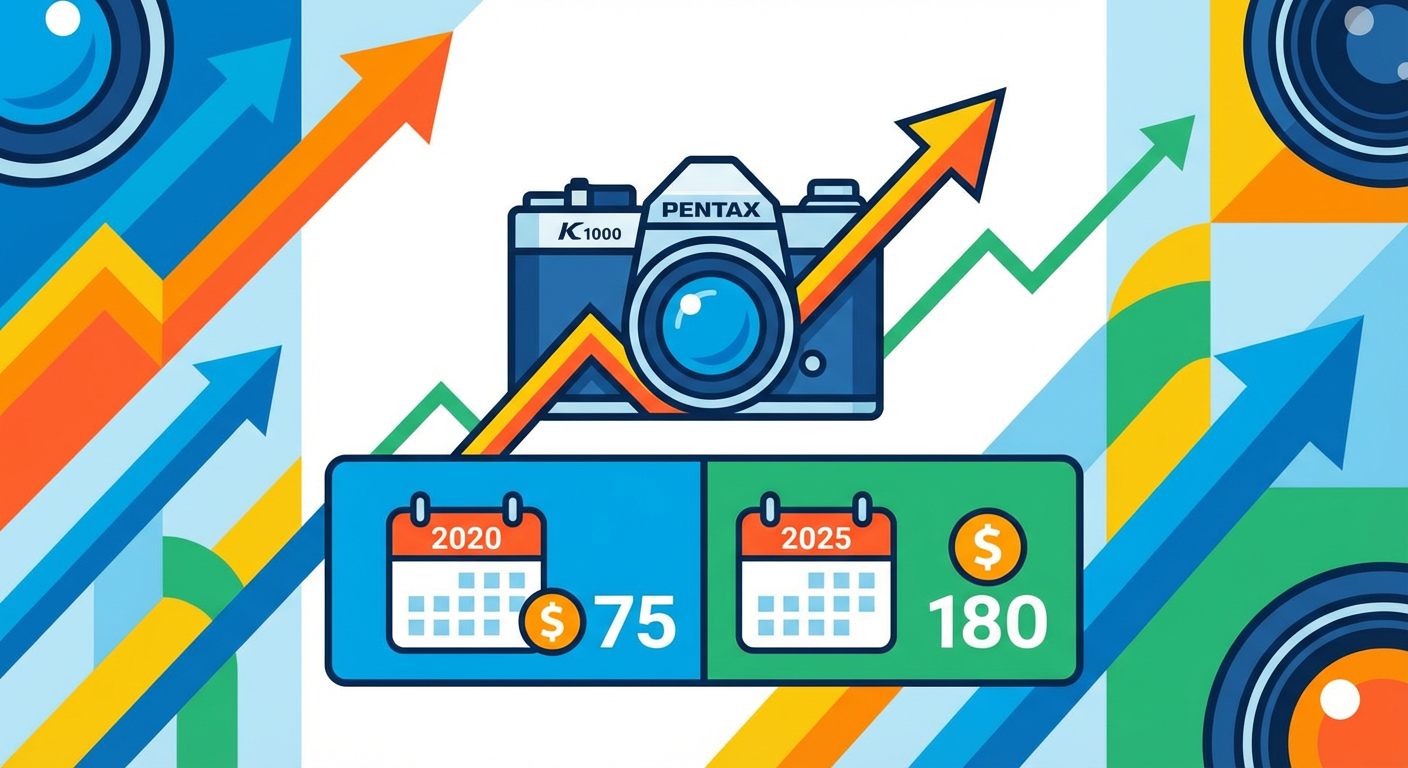
Used camera prices have tripled in some cases. A Pentax K1000, which used to be the beater camera you bought for seventy-five dollars to learn on, now sits on eBay averaging one hundred eighty dollars. That’s doubled in just five years. You’re not buying a learning tool anymore. You’re buying a collectible before you even understand why it matters.
When the Culture Becomes Gatekeeping
A 2025 survey from the Photographic Resource Center asked young people aged eighteen to twenty-four why they stopped shooting film. Sixty-eight percent said cost. Not technical difficulty. Not lack of interest. Not even access to darkrooms or developing services. Pure economics.
This is the death of a culture by attrition. Film photography has always had this romantic mystique around discovery and accident and happy mistakes. You shoot, you wait, you develop, you see what you made days or weeks later. That unpredictability is part of the appeal. But you can’t have that experience if you can’t afford to miss shots. If every frame costs a dollar, you stop experimenting. You stop playing. You start calculating.
The Gen Z photographers who should be right now learning by shooting terrible rolls and discovering their eye? They’re priced out. They’re watching YouTube videos about how film photography works instead of doing it. And that’s not the same thing. That’s passive consumption of a culture instead of participation in it.
The Paradox: Growing Communities, Shrinking Access
Lomography Society Community Reports show membership up twenty-nine percent in 2025. That sounds like good news. The culture is growing. Except almost all that growth is concentrated in major cities with established darkroom spaces. New York. Los Angeles. Chicago. Berlin. Portland. Places where artists already have infrastructure and money and access.
This creates a weird hierarchy. If you live in a city with a shared darkroom, you can participate. You might get a membership, find a community, develop with people who understand why this matters. You become part of something. But if you’re outside those urban centers, even if you’re genuinely interested, you’re locked out by simple logistics and cost combined.
The film photography renaissance is real. It just isn’t universal anymore. It’s become a thing you can do if you have the means, which is the opposite of what made film culture appealing in the first place. It used to be democratic. You could buy a used camera for nothing and shoot and learn. Now you’re making a financial commitment before you even know if it’s for you.
The Supply Side Made This Inevitable
Kodak didn’t raise prices because they’re evil. They raised prices because film production costs money and there’s less demand from professionals than there used to be. When everyone shot film, there were volume deals and competitive pricing. Now it’s a niche market, and niches get expensive. That’s basic economics.
But here’s what’s brutal about it. The price increases are happening right when there’s actually renewed cultural interest in film. Gen Z and young millennials are discovering analog. Instagram culture celebrates grain and light leaks. Celebrities and artists are using film intentionally. The moment is here. The demand signal is clear. And instead of seeing that as an opportunity to offer entry-level products, manufacturers are consolidating around premium offerings.
PetaPixel Film Industry Reporting has tracked this for years. When Fuji discontinued C200, it wasn’t because nobody wanted it. It was because producing budget film at scale isn’t as profitable as letting professionals and enthusiasts pay premium prices for premium stock. The economics favor exclusivity.
What Happens to a Culture When You Exclude Its Future?
Film photography had this beautiful thing going. It was accessible enough that people stumbled into it. A friend gave you their old camera. You tried it. You fell in love. You told other people. It spread through relationships and discovery, not gatekeeping.
Right now, that transmission is breaking. The twenty-year-olds who would have become the next generation of passionate film photographers are instead learning digital or staying on phones. They’re not hostile to film. They just can’t justify the expense when nobody’s making it affordable anymore.
The Lomography numbers show that communities in accessible urban spaces are thriving. Those photographers are developing work, learning together, pushing the medium forward. But they’re doing it in isolated pockets instead of as part of a sprawling, decentralized movement. There’s no neighborhood darkroom collective in most places. There’s no cheap film to experiment with. There’s just expensive equipment and hope that you figured out what you’re doing before you spent all your money.
This is the inflection point. The moment when we figure out whether film photography is a living culture or a luxury hobby. Right now it’s trending toward the latter, and that matters. Cultures need participation to stay alive. They need beginners and mistakes and people falling in love with the work before they understand why. When you price that out, you’re not protecting a culture. You’re slowly killing it.
If you’ve got thoughts on this, if you’re shooting film or thinking about it or watched it become impossible, I want to hear where you landed. The comments section is where this conversation actually lives.