The Moment Print Stopped Being Retro
Around six months ago, I noticed something shift in the zine tables at the coffee shops I frequent. Not the aesthetics — those have always been chaotic and handmade and beautiful. What changed was the messaging. Vendors started stamping “AI-free” across their covers like it was a badge of honor. Then a seal. Then a whole marketing strategy. By late 2024, it wasn’t a whisper anymore. It was the entire point.
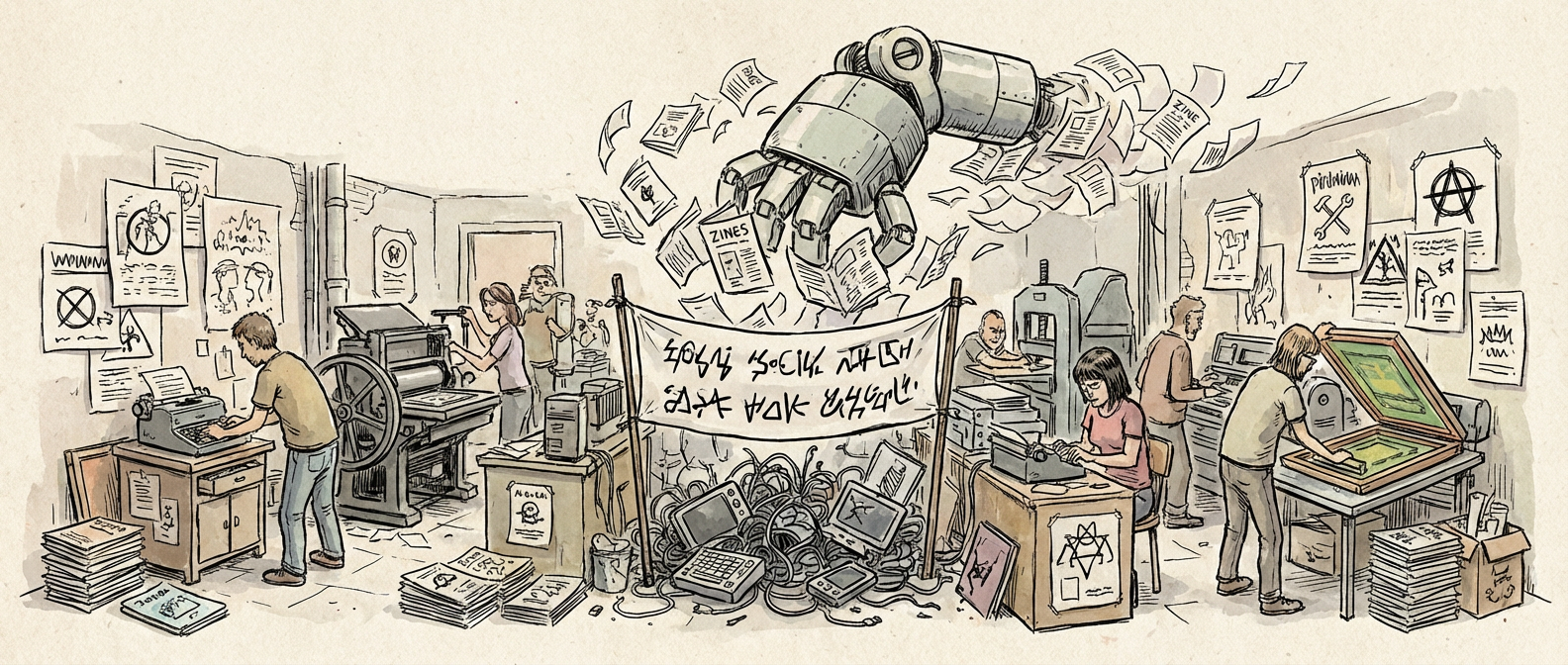
This wasn’t nostalgia talking. This was resistance. And it had numbers behind it.
The data arrived quietly but confirmed what you could feel happening in the margins. Printed Matter NYC’s 2025 art book fair recap showed that first-time zine exhibitors jumped 28 percent between 2023 and 2025. Most of these new vendors weren’t old hands dusting off a forgotten medium. They were young makers — people who had grown up online, understood algorithms, knew exactly what they were rejecting. They were explicitly marketing their work as human-made only. No shortcuts. No generated anything.
When Handmade Became a Premium Market Signal
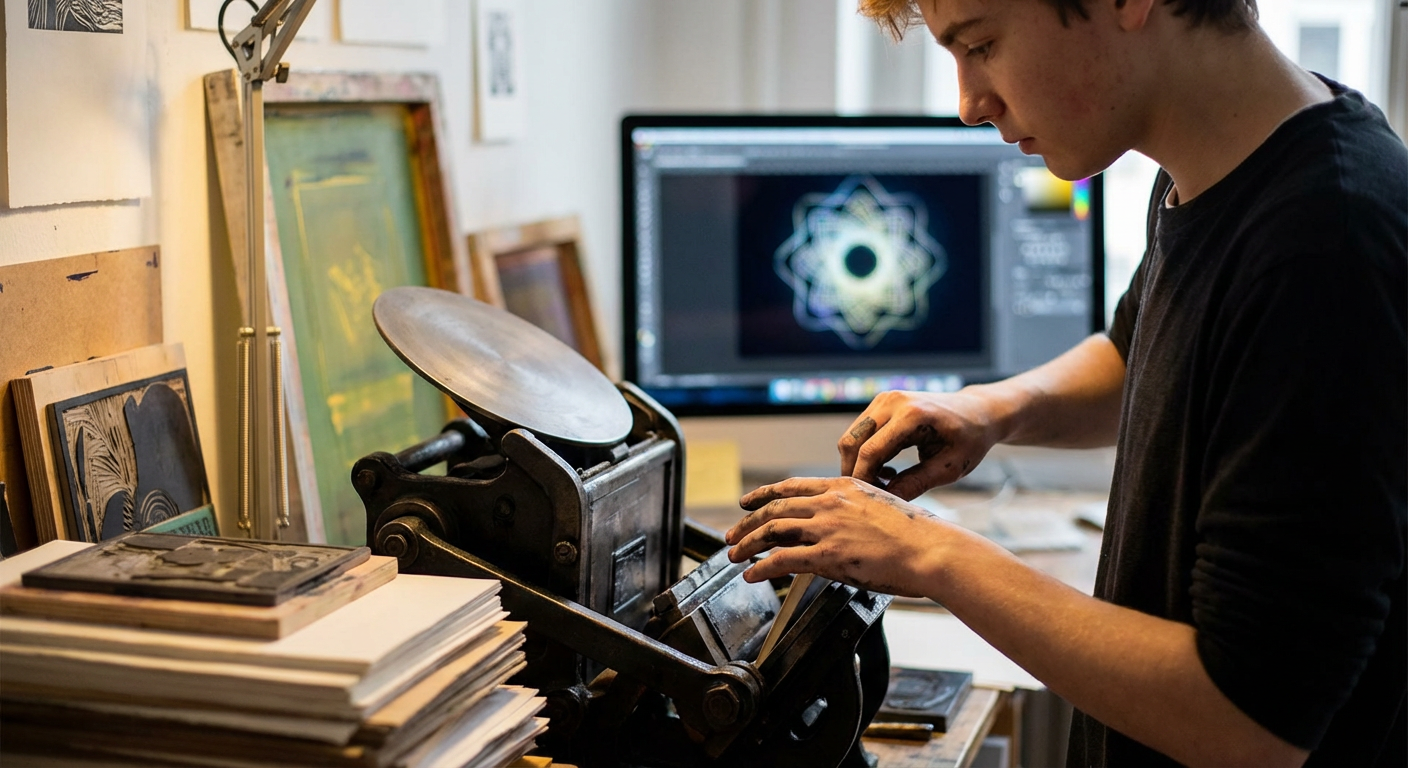
Here’s where it gets interesting. Etsy published some internal data in late 2025 that nobody was quite expecting. Zines and handmade print publications tagged with “AI-free” sold at a 37 percent price premium over the same products without the label. That’s not marginal. That’s real money attached to the idea of human authorship.
Think about what that means. We’ve inverted the usual efficiency market. The version that takes longer, costs more, requires actual human hours — that’s now the luxury item. That’s the thing people are willing to pay extra for. It reminds you that markets don’t just reflect supply and demand. They reflect what we’re afraid of losing.
The psychological shift is even more striking than the financial one. For years, handmade anything in a digital-first world carried a certain wistful quality. Charming. Sweet. A little bit quaint. Now it carries weight. Credibility. A maker who spends six hours folding and stapling a fifty-page zine isn’t being inefficient. They’re being intentional. They’re making a choice that says something.
How a Brooklyn Collective Became a National Movement
The No Robots collective started in mid-2024 as something smaller. A few frustrated designers in Brooklyn, mostly, talking about what it meant to make work in an era when you could theoretically have something “designed” in ninety seconds. By January 2026, they’d grown to over three thousand registered zine makers across fourteen US cities. They didn’t advertise traditionally. They didn’t need to. People found each other because they recognized the values.
The first national print fair happened in Chicago in February 2026. I wasn’t there, but I’ve seen the photos from people I know who went. The energy was completely different from what you’d expect from a print gathering. This wasn’t nostalgia tourism. This was urgent. People were trading techniques, comparing papers, talking about typefaces and binding methods with the intensity usually reserved for startup founders pitching to venture capital.
What struck me most was the age range. This wasn’t boomers trying to reclaim their youth. Society of Publication Designers’ 2025 industry report found that 68 percent of independent print designers under thirty cited resistance to AI aesthetics as their primary motivation for choosing analog production. These are people who grew up in a fully digital world. They’re not choosing paper as an alternative. They’re choosing it as a rebellion.
The Economics of Choosing Difficulty
In London, a shop called Tenderbooks that specializes in independent publications reported something nobody expected. In 2025, zine sales outpaced artist monograph sales for the first time in their twelve-year history. Revenue in the zine section jumped 55 percent year over year. That’s not a fluctuation. That’s money actively moving toward the format that requires the most human labor.
What’s happening isn’t just a preference shift. It’s an economic realignment. For decades, the publishing world ran on a straightforward logic: automate everything you can, reduce friction, scale infinitely. Digital distributed that model globally. But there’s always been a counter-current of people willing to pay for the opposite — willing to seek out things that are harder to make, slower to produce, more obviously marked by individual hands.
The AI moment didn’t create that counter-current. It clarified it. It made it visible. Suddenly, “human-made” became a category you could market. Because the default was in question.
What Comes Next for the Print Underground
The zine resurgence isn’t about going backward. It’s about going sideways. Creating space where different values operate. Where time investment matters. Where mistakes are features, not bugs. Where you can see the person behind the work in the way the binding warps slightly or the color registration isn’t perfect.
Watch what happens next. Watch whether this remains niche or expands. Watch whether other print formats start adopting the “AI-free” positioning. Watch whether pricing continues climbing as demand outpaces makers’ capacity to produce by hand. Most importantly, watch whether the people making these things stay committed to the friction, or whether — like every underground that gets noticed — this becomes something else entirely.
The coffee shops I frequent have more zine tables now. The paper quality keeps improving. The designs have gotten more sophisticated. But the core thing hasn’t changed. Someone sat down with a blank page and made something that couldn’t have come from anything but human decision-making. That’s the rebellion. That’s what’s selling. And if you know where to look, you can already see it everywhere.